12/08/2025
In June 2025 the FCA announced it was leading an international crackdown on financial influencers, or ‘finfluencers’ – a term coined for online personalities using social media to promote financial products, share insights and offer advice. As the FCA highlights, whilst many are legitimate, others act without authorisation to falsely promote success based on their own financial decisions.
Earlier this year, we surveyed close to 1,000 self-directed end investors evenly split across the four generations: Boomer, Gen-X, Millennials and Gen-Z. In the results of this survey, Gen-Z investors (those born between 1996 and 2012) are most likely to rely on finfluencer content as a source of information about asset management firms and funds throughout their investing journey. Although before we dive into why this is, let’s start by understanding who Gen-Z are as investors.
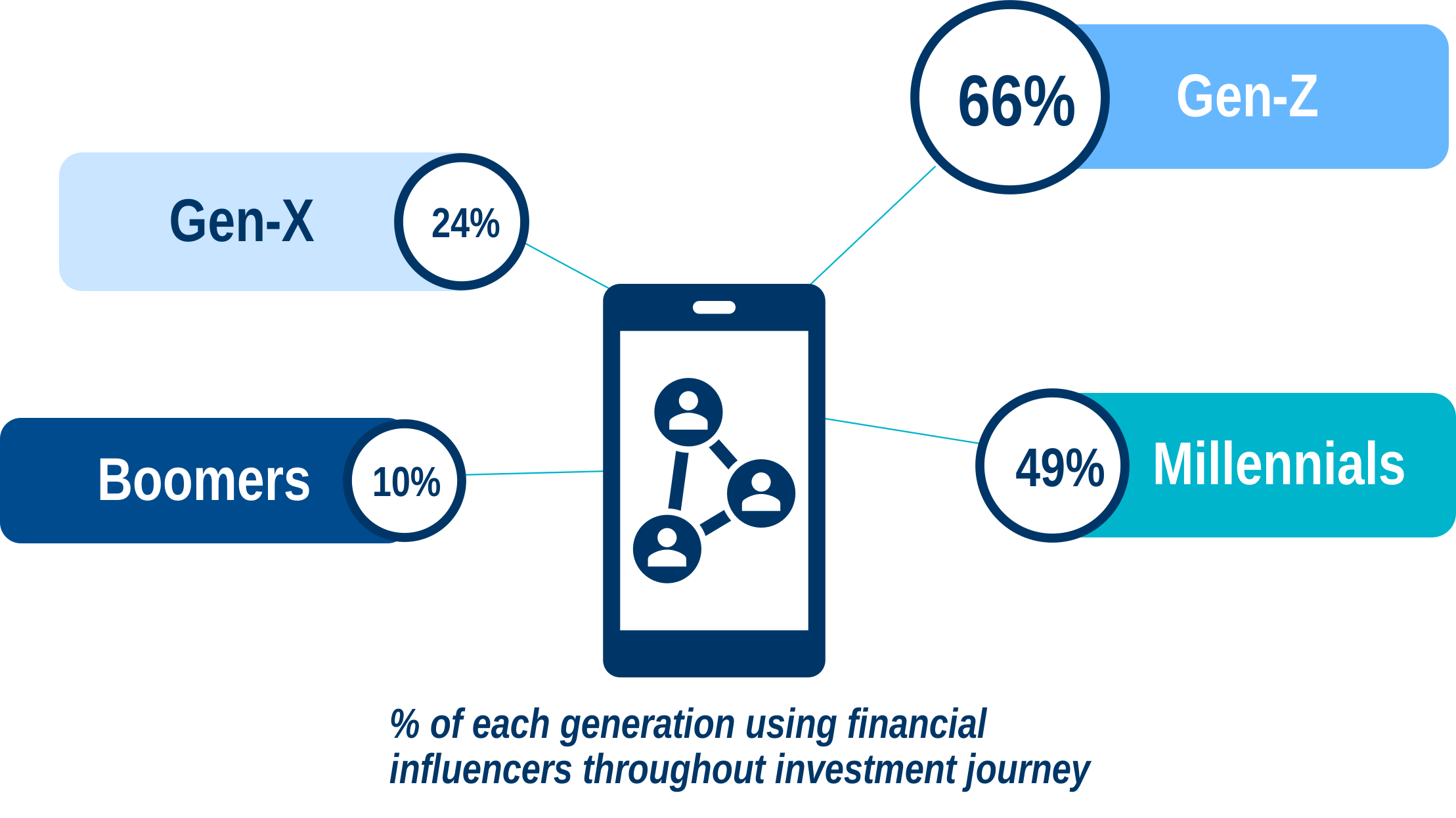
Q28new. What channels do you use/refer to when looking for information about asset management firms or their funds? Base: Those using finfluencers (340), Boomers (24), Gen-Z (58), Millennials (114), Gen-Z (144)
Gen-Z as the confident but vulnerable investor
There is a confidence-sentiment mismatch at play when we look at Gen-Z investor behaviour in more detail. While Gen-Z are significantly more likely to exhibit Capability Vulnerability characteristics when we run the findings through our index aligned to the FCA’s vulnerability categories (meaning they lack the knowledge, skills, or confidence to manage their finances), they are also shown to have the highest levels of self-defined investment knowledge. Interestingly, although Gen Z rates their investment knowledge higher than any other generation, they are also far more likely to say their investments haven’t met expectations or delivered the returns they hoped for.
And of course, it wouldn’t be a piece on Gen Z investors without mentioning crypto. Despite having the lowest overall risk appetite, a striking 59% of Gen Z report holding cryptocurrency compared to just 4% of Boomers.
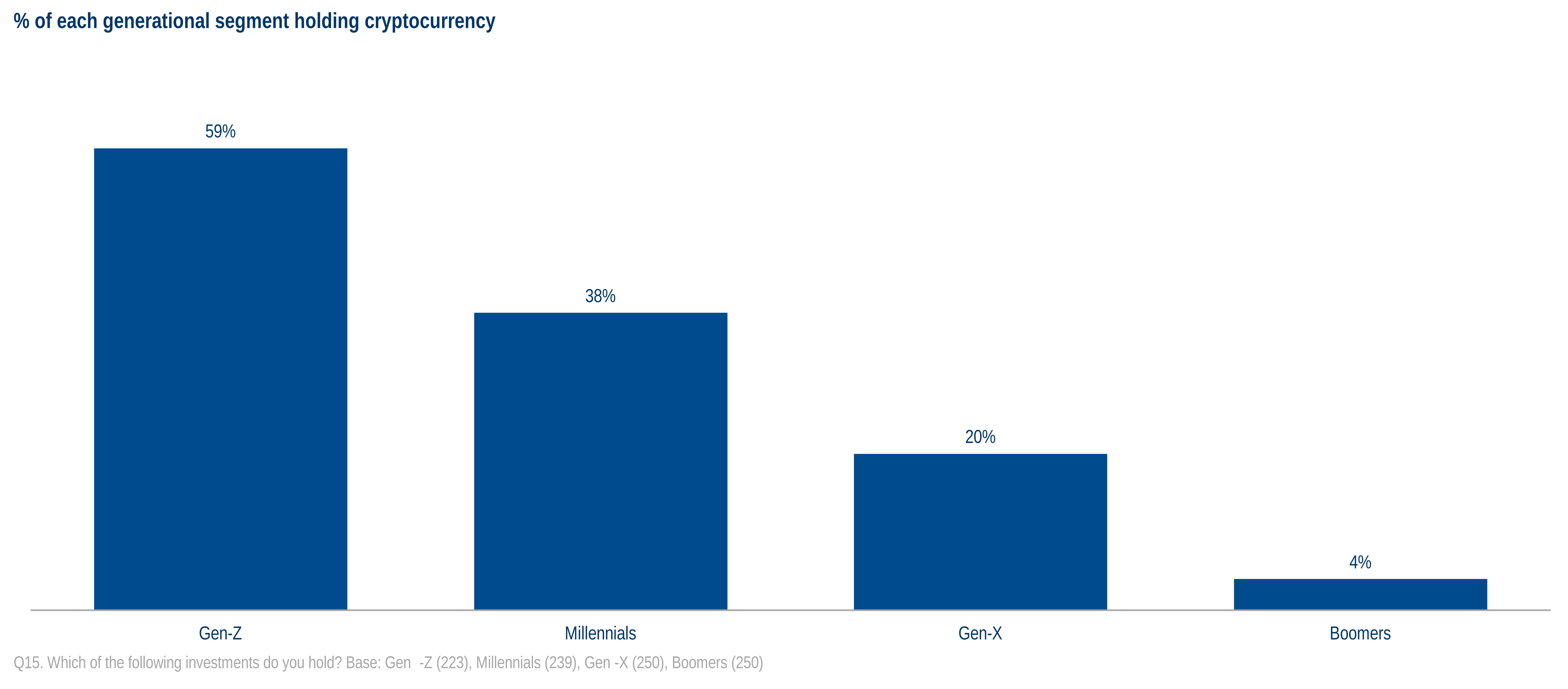
So, what’s behind the gap between Gen Z’s confidence, their actual experiences, and their investment outcomes?
The growing trust Gen-Z are placing in finfluencers
As stated, our research shows that Gen-Z’s reliance on finfluencer content is higher than the other generations, and their reasons for using this content also differ. They are most likely to use this content for investment advice/ insights compared to the other generations, who tend to use it more as a soundboard for ideas, or pointers into areas of interest. Gen-Z are also more likely to use this content because information feels simplified. When asked about why they were using finfluencer content, one said:
“They provide short but informative snippets of information, communicated in a way that is easy to understand, and easy to apply in context. I’ve spent enough time on social media to be influenced in this way.”
While another told us:
“I use financial influencers when looking for information about asset management firms because they offer free information that’s just a click away. This makes financial education accessible to everyone, regardless of their background or income.”
The Downside
However, Gen Z investors’ growing reliance on “finfluencers” for investment advice comes with real risks, especially when those same influencers are under FCA scrutiny. The regulator’s concerns are valid: finfluencers can oversimplify risk, promise unrealistic returns, and push unregulated products.
Viewed through this cautionary lens, it becomes clearer to see why so many Gen Z investors are drawn to cryptocurrencies. Some finfluencers promote crypto not as a high-risk asset, but as a “can’t miss” opportunity, fuelling its popularity despite the dangers.
Gen-Z are navigating a different investment landscape
Gen Z represents a new kind of investor – one shaped by an online world of curated content, finfluencers, and algorithm-driven echo chambers. The frustration and disconnect they express may stem from a gap between the expectations set by this content and the reality of their investing experiences.
With this in mind, it’s a welcome sight to see the FCA taking strides to tackle illegal finfluencer content, because according to our generational research, this looks to be a necessary step from the financial industry in bridging the gap among young investors between confidence and capability.